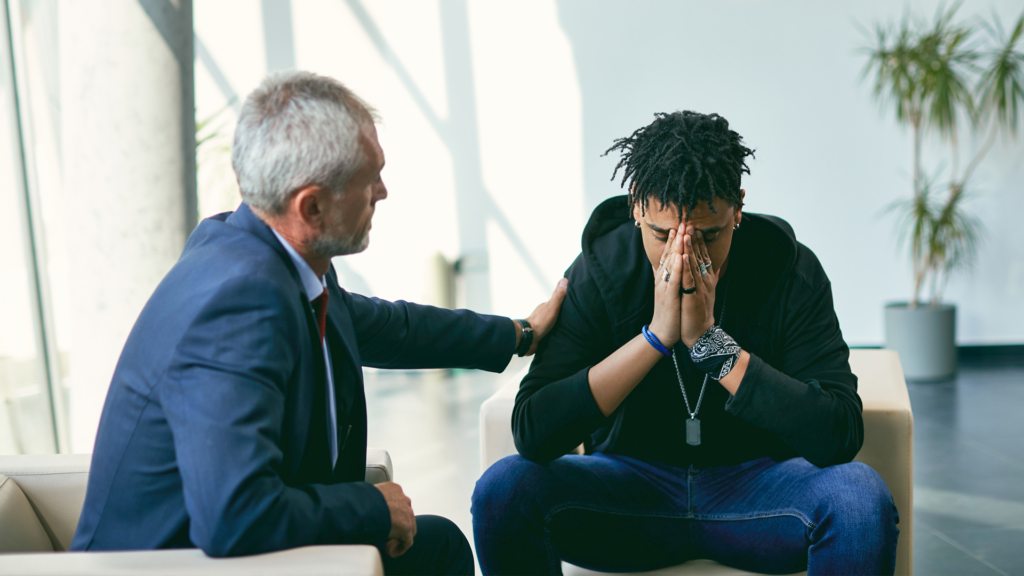



By all accounts, Gabriel has it together. He’s smart, gregarious, and funny, lives in a beautiful home in a picturesque Los Angeles neighborhood, and has a thriving career in the arts. But things weren’t always this way.
“I knew I was different from a very early age,” he says. “I was what was described as a shy kid. But as I entered adolescence, it became clear that it was something more.” While worry and fear of certain social situations are normal and even healthy experiences, Gabriel’s worry and fear were bigger, more intense, and omnipresent. “Imagine the anxiety you feel about a huge test that could determine the course of your life and then apply it to every single social situation, both real and imagined. I lived in a constant state of that worry, regardless of whether or not the situation warranted it. And often there was no ‘situation’ to begin with, I just had a general feeling of dread of hypothetical social encounters and I would have anxiety about getting anxiety.”
By the time Gabriel was in college, his social anxiety was paralyzing. “I couldn’t have a normal social life because I would be overcome by fear; if I was invited to a party I would stay up all night sick to my stomach thinking that things were going to go wrong. I had such a fear of being called on in class and having to speak in front of others that I couldn’t concentrate on my work and skipped more classes than I attended. I failed so many classes in my sophomore year that I was called into a meeting with a guidance counselor at school, and it was during that meeting that I was first introduced to the idea that I might have Social Anxiety Disorder.”
Despite the fact that social anxiety had become a ruling force in his life, Gabriel had never considered that it could be the result of a mental health disorder. Instead, he believed that his constant fear and worry were simply a matter of personal weakness. “I didn’t have a reason to have social anxiety. I didn’t have a bad childhood or mean parents or some horrific trauma in my background or anything that I believed would justify what I was experiencing. I blamed myself and felt a lot of shame. It took me a long time to understand that my anxiety wasn’t my fault and that the causes of social anxiety disorder aren’t necessarily experiential.”