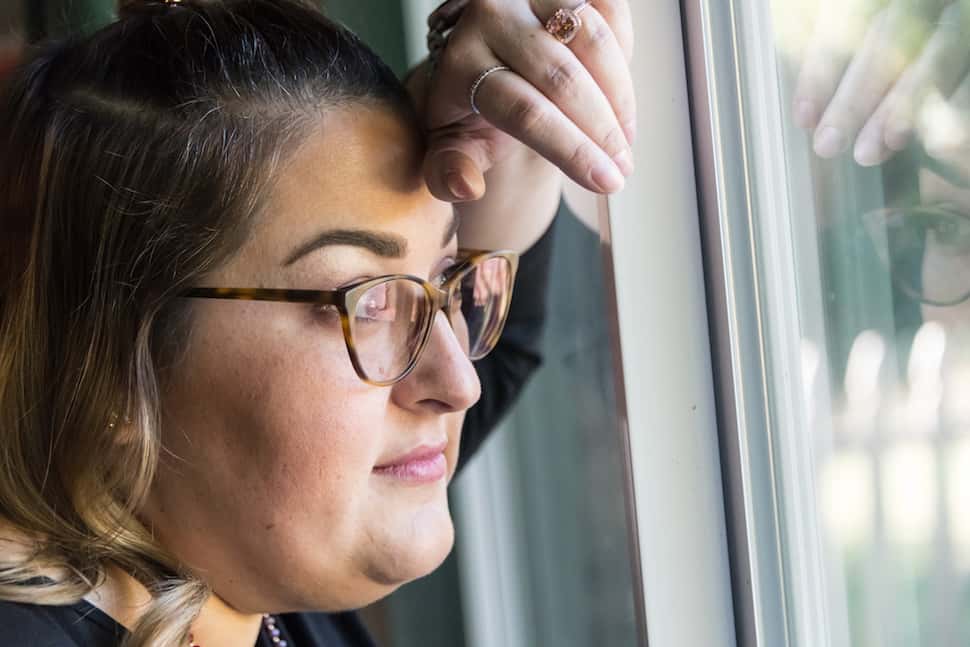



Childhood sexual abuse changes you. “I feel like there was a version of me that disappeared the day I was abused for the first time,” Danielle explains. “Those few minutes became the point at which the before disappeared and the after began.” Danielle was seven years old the first time she was sexually abused and the girl who had once been an outgoing, happy, and trusting kid suddenly became withdrawn. This part of her experience Danielle understandings. “If someone violates your trust in that way, if you witness that kind of cruelty, of course it is natural to become sad, to become suspicious, and to retreat within yourself,” she says. “It is a survival mechanism.”
As the abuse continued, new changes began to arise as well. She began to experience concentration problems and memory difficulties. Even as she entered high school and the abuse stopped, her academic performance suffered and she struggled to integrate new learning despite her natural intelligence. More distressing, however, were her anxiety, depression, aggression, and increasingly out of control behaviors. “I was always keyed up and ready to explode in some way,” she remembers. “But my sadness, my anger, my inability to relax were assumed to be the normal experiences of an overemotional teenage girl. In fact, I assumed it myself. It becomes easy to hide yourself inside a cliché.”
But her inner volatility did not dissipate with age. “By the time I was 23 it had become obvious that it wasn’t about being a hormonal teenager and I needed help,” she says. “But I thought help meant that I would get some antidepressants and be sent on my way. Instead, help meant retracing the trajectory of these emotional disturbances. And it all went back to the abuse.” Talking about her traumatic experiences wasn’t easy; for years, Danielle had coped by denying there was anything to cope with. In the safety of her therapist’s office, however, she began to not only speak about what had happened to her, but understand how her current emotions and behaviors were born from a place of trauma that had left deep neurological impressions.
While it has long been known that the childhood trauma of sexual abuse can have long-lasting emotional and behavioral repercussions, the mental health community is now coming to increasingly recognize that many of these repercussions are the product of changes in the brain brought on by that trauma. If you have experienced childhood sexual abuse, recognizing the connections between childhood trauma and the brain can be essential to making sense of your own post-traumatic responses